
Building a Better Mousetrap
Loyalty By Design (Part 2) — Building motivational loyalty programmes
Part 1 — Points of Points | Part 3 — Holding the Line
Mark Sage - 12 min read - 20/09/2025
Ask someone how many loyalty programs they belong to and they’ll probably name three or four. Yet the real numbers can be far higher. In the US, households hold more than 17 memberships on average. In Australia, consumers reportedly signed up to 98 million memberships in 2021 — around 4.4 per person.
Those numbers look impressive until you dig deeper — only about 40% of memberships are actively used. More worryingly, a study by McKinsey back in 2013 suggested companies with loyalty programs actually grew more slowly than those without — 4.4% versus 5.5% annual revenue growth.
That doesn’t mean loyalty doesn’t work. It does (something McKinsey acknowledged). What it means is that too many programs are poorly designed. A “me too” scheme, with points added as an afterthought, rarely delivers long-term value.
The question isn’t whether loyalty programs can work — it’s what makes them work.
When we launched yuu Rewards, we achieved an unusually high 12-month active rate. Where many programs would consider 40–60% healthy, yuu Rewards sat significantly above that.
So why? What drove members not only to join, but to keep coming back?
To answer that question, we need to get into the detail — the thinking that shaped our core decisions on programme design and the loyalty mechanics beneath it.
That starts inside the customer’s head — not inside the app or the algorithms. We need to probe why people use a programme in the first place, and what keeps them coming back. From there, we can design a scheme that works harder and rewards more.
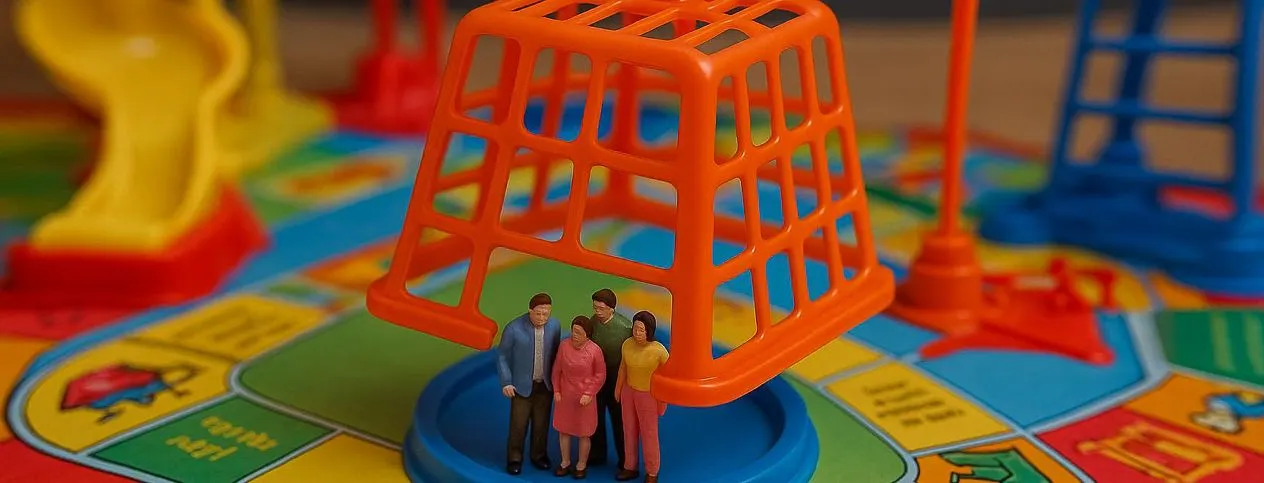
As the saying goes, “Build a better mousetrap and the world will beat a path to your door.” The secret to that mousetrap isn’t partnerships or richer rewards. It’s psychology.
To see why psychology matters for loyalty, we need to go back to May 1938 — to a cold Minnesota that had just experienced one of its heaviest snowfalls ever for that month, with over 12 inches falling in just one day. That same month, a young psychologist name B F Skinner published his now famous book called The Behaviour of Organisms. This book, still relevant 80 years later, explains more about loyalty programs than many marketing playbooks.
I’ve mentioned B.F. Skinner’s work around Operant Conditioning before, however now we’re going to delve a little deeper to see why loyalty programmes work and how we used this knowledge to design yuu Rewards.
Consider how often you check your phone for messages or notifications. Whatever number you come up with, you’ll probably be way off the mark because half the time, we do it almost on autopilot.
Back in 2014 it was highlighted that we were checking our phones over 1,500 times per week — more than once every five minutes during waking hours. More recently, a survey in the US showed this was now 352 times per day — about once every three minutes.
It’s not just the checking however, we are also at the beck and call of these devices.
We respond almost instantly. A UK study found people took an average of just 104 seconds to react to a notification, with 70% responding within six seconds. Our mobiles aren’t just remote controls for life — they’ve become the remote control of our lives.
What’s happening here is a subtle rewiring of our brains. Evolution trained us to react to movement in the corner of our eye — the “orienting response” that kept us alive. Today, that survival mechanism is hijacked by pings, flashes, and vibrations. Each notification triggers a reflex; each reflex reinforces the behaviour.
There is more to this phenomenon however and this is where that cold May in Minnesota comes in.
Skinner’s research showed that voluntary behaviours are shaped by their consequences, and repeated when followed by positive reinforcement. The key is in how those reinforcements are scheduled.
Skinner identified three main reinforcement schedules, namely: -
Continuous — Every action is rewarded. Think base points for every purchase.
Interval — Rewards appear based on time, either fixed (e.g. a monthly bonus) or variable (e.g. a surprise coupon sometime this week).
Ratio — Rewards tied to actions, either fixed (a coffee stamp card) or variable (slot machines, where payout odds are constant but timing unpredictable).
It’s these reinforcement schedules that are key to understanding why we’re so quick to react and respond to that app notification — and why some loyalty programs work, and others do not. If our aim is to shape behaviour, then schedules matters.
What Skinner noted was predictable reward schedules — whether continuous or at set intervals — quickly lose power, meaning behaviours become “extinct” quickly when the motivator is removed. You’re essentially just ‘buying’ this behaviour and it stays for as long as the reward keeps giving. By contrast, variable reinforcement schedules — where both the timing and the value can’t be predicted — create the strongest, most persistent behaviours. They take longer to build, but once established, they stay for longer.
This is one of the reasons why some loyalty programmes tend to decline over time.
If all the programme does is issue points in response to spend, then over time it will become inconsequential to the member. The behaviour may continue, but the ability to change or lift it dulls; customers operate on auto-pilot.
This was something I’d seen previously on other coalition programmes whereby bonus points offers just didn’t change behaviour — the member had essentially already tuned out.
Variable reinforcement is different, and it’s why people keep pulling slot machine handles or refreshing their inbox.
As Michael Harris wrote in The End of Absence: “Animals, including humans, become obsessed with reward systems that only occasionally and randomly give up the goods. We continue the conditioned behaviour for longer when the reward is taken away because surely the sugar lump is coming up next time.”
Variable interval reinforcement schedules then are the critical factor in repeatable, ongoing behaviour.
If you’ve ever wondered why your kids (or you) are so drawn to video games — now you know, it’s the reinforcement schedules at work. Players grind through repetitive tasks not because they’re fun, but because the next reward might be just one more level away. Games layer schedules — continuous XP points, timed quests, random loot — to keep players hooked. Psychologists call this a compound schedule, where overlapping reinforcement types combine for maximum effect — creating “a persistent pattern of responding to a stimulus [..] that is resistant to behavioural extinction.”
Your mobile phone behaviour is no different.
Behavioural psychologists describe the impact of receiving a new message as a “reinforcer, or reward for checking. You might check [..] at 9:00 a.m. and have 5 new messages, at 11:00 a.m. and have none, and then at 3:00 p.m. you have 7. As long as you periodically continue to receive messages, your checking behaviour will continue”.
This is the variable interval reinforcement schedule in practice, and the randomness or unpredictability of the notifications is what builds the behavioural reinforcement.
It’s also what connects a WhatsApp message to gambling –they leverage the exact same psychology.
Your mobile usage is sticky — in part — because of the unpredictability of notifications, and the same is true for slot machines. They don’t need to pay out often — just unpredictably. Co-Author of the book Mind Hacks and lecturer at the University of Sheffield, Dr Tom Stafford discusses how these two seemingly different activities basically rely on the same underlying psychology, saying:-
“Both slot machines and email follow [..] a ‘variable interval reinforcement schedule’ which has been established as the way to train in the strongest habits. This means that rather than reward an action every time it is performed, you reward it sometimes, but not in a predictable way. So, with email, usually when I check it there is nothing interesting, but every so often there’s something wonderful — an invite out, or maybe some juicy gossip — and I get a reward.”
Checking email or messages is a relatively mundane action. Sure, you’ll occasionally get “something wonderful”, but most of the time, that’s not the case. And this brings an interesting dynamic to the fore — when it comes to operant conditioning, it can help mask the mundane.
In a study entitled “Understanding and Assisting Excessive Players of Video Games”, the authors observed that reinforcement schedules — especially compound ones — kept players playing for longer and carrying out behaviours that were repetitive or boring, simply to chase the reward. They noted that “variable-ratio reinforcement schedules [..] often produced what was termed ‘grinding’ behaviour. Grinding refers to the repetition of an action or series of actions in a video game in order to obtain a reward.”
So, the power of the right mix of reinforcement schedules can mask the more mundane actions required to achieve it.
One thing that crops up quite a lot when talking about loyalty programme design is the pushback that our market is somehow different. Whether that market is High Net Worth credit card customers, buyers of luxury goods, customers of a certain age, or residents of a given county. It’s always the same message which is “I get it, but our customers wouldn’t respond to that”.
In a more general sense, people consider themselves unique and with their own individual decision-making processes. Nobody likes to think they can be influenced in some way unconsciously — so that pushback is likely less about their customers and more about themselves. But the reality is that people tend to respond consistently to the same kinds of environment — because our brains are all wired in the same way.
Keeping with the video game theme, research has shown that usage is driven more by the design of the game mechanics — the reinforcement schedules — than the individual gamers characteristics. A research paper entitled “The role of Structural Characteristics in Problem Video Game Playing” pointed this out saying: -
“In particular, ‘structural characteristics’, defined as those features that facilitate the acquisition, development, and maintenance of playing behaviour irrespective of the individual’s psychological, physiological or socioeconomic status, have been shown to play an important role in explaining the appeal of gambling activities.”
The point of all this is to say that behaviour is less about the individual than the environment.
Design the mechanics right and almost everyone responds in the same way. Get the schedules right and you can make even mundane actions — like swiping a loyalty card or opening an app — feel worth repeating.
So, back to the question at hand — If we can understand what makes someone use and continue to use a loyalty program — like they do a video game or their mobile phone — we can design a programme that works harder and rewards more.
Which brings us back to the story of yuu.
Think of loyalty programme design as layers. We’d already done work on the initial layers around the core programme design such as enrolment, security, base earn, voucher-based redemption and the digital customer experience.
The next layer was motivational design — Skinner’s operant conditioning — and here reinforcement schedules directly shaped yuu Rewards.
Most loyalty programs rely almost exclusively on continuous reinforcement — spend money, get points. As we’ve just discussed, this creates a learned behaviour, but not a sticky one. Customers may continue swiping cards out of habit, yet the connection between behaviour and reward is shallow. The program risks becoming background noise and we’re essentially designing in programme extinction from the start.
The second issue is that our brains are increasingly becoming used to managing constant distraction — honing our orientating responses. With so many things fighting for our attention — from a WhatsApp ping to a TikTok video — the larger the gap between behaviour and stimulus, the less likely our brain links the two, reducing the benefit of reinforcement.
This shows up at the till. Customers keep swiping because it’s learned (or prompted), but it’s passive. There is no stimulus driving this and so trying to get customers to change or uplift their behaviour doesn’t work because it has become inconsequential.
In designing yuu Rewards, we wanted to avoid that trap.
Our goal was to build compound schedules that created multiple reinforcement loops, resisting extinction and driving repeat engagement.
We weren’t alone in this; frequent-flyer programmes have long combined schedules. Miles for flights (continuous) overlap with fixed-ratio goals (tiers, companion tickets). Even without the strongest variable mechanisms, compound schedules engage.
The base earn mechanic — continuous reinforcement — amplified by instant push notifications showing points earned, was the first thing we put in place. That simple real-time “ping” tightened the link between behaviour and reward, making repetition more likely.
Then we layered on promotions. Some were instant benefits, like money off the next purchase. Others stretched behaviour — spend a little more, earn a little more. Offers rotated daily with new offers coming in, old offers being taken off and existing offers changing in order based on age and value. All this created variability in both timing and value, giving members a reason to check-in every day.
We used push notifications to surface the top, personalised offers for them so that their mobile would ‘ping’ regularly, but randomly, to remind them of these ‘rewards’. This helped to create additional stimulus activity around the app and the offers. Post launch, we were sending upwards of 7 push notifications per day — so this was actively used.
Finally, we took this design further with with the concept of ‘flash offers’ — one-day, high-value deals, often limited in quantity, pinned to the top of the feed.
These created a sense of urgency and a fear of missing out — if you didn’t check the app regularly, you’d miss the best rewards.
The result was what gaming would call “grinding” — members opening the app daily, not knowing when “something wonderful” might appear, but not wanting to miss it when it did. On average, half the app opens we saw weren’t related to in-store earn, so these mechanics worked well in encouraging browse.
Motivational design spans multiple disciplines. It covers Strategy (how schedules overlap), Product (capabilities, tracking, alerts, unlocks), UX (visibility and comprehension), Operations (content to drive reinforcements), and Partnerships (sourcing and funding that content).
You can sketch the perfect design in an ivory tower, but you still have to sell it to the wider business.
This is exactly where I was in August 2019 — and despite our best intentions, not everyone was convinced.
We had significant push back from the banners who we’d be relying on to actually provide the offer content. Their world was product and print. To produce in-store POSM efficiently, they worked to weekly schedules — offers cycling in and out each week. Great for flyers, wraps and wobblers; not so great for conditioning behaviour via daily variability.
A key footfall driver for them was full-page press ads collating weekly offers. Asking teams to now create more promos with different daily drop dates was never going to fly.
Still, we held fast on the motivational design but compromised a little on the timing.
Instead of each banner giving us an offer for each day, we allocated a single day each week to a given banner. This meant members still got fresh content daily, and banners kept their familiar weekly rhythms. Crucially, structural variability remained intact.
The last article argued base points are the foundation of a strong programme — reducing cognitive load — so when I now say here that base points are quite shallow in terms of stickiness and more prone to extinction, this isn’t intended as contradiction. Instead, I’m highlighting the trade-off.
On their own, base points as predictable rewards risk fading into the background. However, their very predictability is also their strength. They create a low-friction “game loop” that keeps the programme always on, always present, and always valuable.
In fact, base points often work less like Skinner’s operant conditioning and more like Pavlov’s classical conditioning. Just as Pavlov’s dogs learned to salivate at the sound of a bell, members quickly learn to associate the act of swiping a card or scanning an app with the certainty of reward. Every time a cashier asks “Are you a yuu member?”, it reinforces the connection. Over time, this ensures the programme becomes an automatic part of the shopping routine.
In this case, base points are not so much about chasing a goal, but about embedding the programme into the routine of shopping.
The danger is mistaking that passive collection for full engagement. Base points deliver reach and consistency; they don’t get stretch. That’s why, at yuu Rewards, we treated them as the entry ticket, but then layered other mechanics on top — offers, challenges, and flash deals — to keep members leaning in.
Our goal was to blend continuous, interval, and variable ratio reinforcements into a program that was both predictable enough to trust and unpredictable enough to stay exciting.
I believe we hit that goal. The numbers showed high daily active usage of the app and a 12-month active rate well above the market average.
In the end, that was our better mousetrap. Not more partners. Not more features. But better mechanics. Programs that rely only on points earn and burn are building in their own decline. Programs that use psychology to wire in habit create real loyalty.
Of course, designing the mousetrap is only part of the challenge. The next is keeping it working — ensuring the flow isn’t broken and the experience doesn’t dull. That’s where we turn next.