
The Art of Collecting
And it's impact on the underlying psychology of loyalty and driving spend
Mark Sage - 8 min read - 21/06/2025
I was never a big sports fan, but collecting Panini football stickers was a defining part of my childhood.
I didn’t care about the teams or players — most were unrecognisable to me — but the act of collecting itself was thrilling. Swapping stickers with friends, chasing the elusive silver club badges, and slowly filling in the book offered a strange kind of satisfaction.
Decades later, not much has changed. Panini sticker books remain wildly popular. During the 2022 World Cup, Argentina experienced such a frenzy around collecting them that it made international headlines. A shortage of stickers even prompted government intervention. As The Guardian reported:
“Sticker mania has swept over Argentina like a tsunami this year, creating a scarcity on the sticker market that has quite literally become an affair of state. [..] Trade secretary Matías Tombolini was forced to call a meeting with Panini executives and sweet shop representatives to try to solve the scarcity.”
Collecting isn’t just for kids and stickers though.
Shoes, stamps, handbags, trainers — the impulse to gather, complete, and own is a deeply human one. And it has long played a role in loyalty marketing.
Retailers, particularly in grocery, convenience, and pharmacy, have harnessed collecting behaviours through stamp-based promotions.
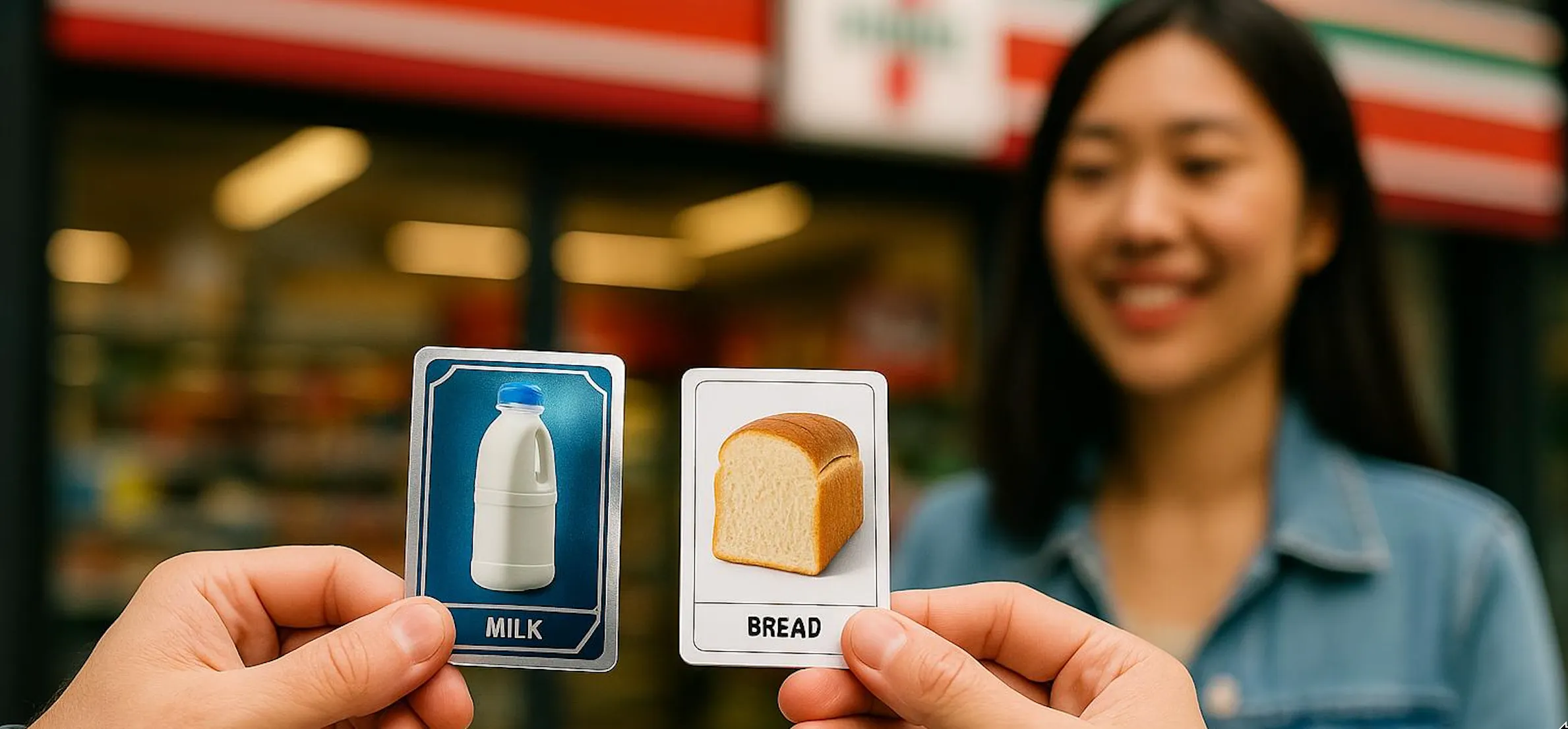
These limited-time programmes offer paper stamps or more recently, digital stickers, that customers earn by spending or buying specific items — and which are typically redeemable for branded goods like cookware or toys.
Firms like TCC Global and Brand Loyalty have industrialised this mechanic, sourcing exclusive products through licensing deals with brands such as MasterChef or Marvel.
Beyond short-term promotions, collecting also appears in everyday loyalty mechanics. Coffee chains like Caffè Nero in the UK use digital stamp cards to reward visits, driving consistent engagement. Their digital stamp programme garnered over 500,000 downloads within just a few months of launch.
But collecting stamps is psychologically distinct from collecting points.
Points are flexible, often fungible across categories, and build slowly over time. Stamps, on the other hand, are more focused. A specific number of actions — visits, purchases, or spend thresholds — unlock a known, finite reward. This simplicity creates a sharper motivational pull; customers know what to do, what they’ll get, and how close they are.
This behavioural pull was famously explored in “The Endowed Progress Effect” by Nunes & Drèze. In their study, providing customers with two “free” stamps on a ten-stamp card made them more likely to complete the full card than those given a fresh eight-stamp card. Progress — even illusory — matters.
The paper concluded: -
“Interrupted or uncompleted actions engender a strong motivation to complete the action [..] once a person accepts a task, they tend to stay on that course until the goal is achieved.”
Equally important is how to maintain collecting behaviour over time.
The book “Yes! 50 Secrets from the Science of Persuasion” highlights how small early commitments lead to bigger behaviours. In one experiment, people who agreed to place a small “Be a Careful Driver” sign in their window were dramatically more likely to accept a large front-yard billboard two weeks later. This small action had reshaped their identity and is a form of “priming”.
The concept of ‘priming’, as described in the book “Nudge”, explains why. Asking someone who they might vote for, makes them more likely to actually vote. This initial soft introduction — a small sign or a question — primes the person and then acts as a reinforcement for a later action.
Small steps lead to larger outcomes when they align with how someone sees themselves — even if you’ve had a hand in actually setting out that vision.
Whilst these principles of collecting are great, putting them into practice can be more challenging. You’re designing loyalty mechanics and offers to tap into consumer psychology, but this sometimes clashes with the businesses desire to manage margins and trade promotions.
On yuu Rewards, we worked closely with our brand partners to both structure and unlock offers that would work to ‘prime’ new members and embed collecting behaviours from day one.
We linked welcome bonuses, not to sign-up, but to first transaction — ensuring the member had taken a decision to earn them. We front-loaded earn opportunities with store-wide multipliers funded by brand support. These tactics helped supercharge the points balance early — building a sense of progress and tapping into that collecting instinct.
Crucially, members had to opt in.
The act of accepting an offer reinforces the sense of ‘choice’ and makes the benefit feel earned — this then also acts to ‘prime’ the member for future offers and behaviours.
Simply handing out free points wouldn’t have achieved the same psychological commitment.
We also took this further. We created a hybrid loyalty design — combining both points and stamps — to more deeply harness the power of collection.
Most loyalty programme designs choose one or the other — being built around a stamp based currency, or leveraging points. We believed though that the combination could create deeper engagement.
Three months post-launch, 7-Eleven asked us to introduce stamps. As a high-frequency, low-basket-value business, 7-Eleven faced structural challenges. Many items — like tobacco or top-up cards — were excluded from points earning, reducing loyalty penetration. In addition, the smaller basket size meant people we’re less likely to present their loyalty id — the effort to earn points on a litre of milk just doesn’t feel worth it for many customers.
This wasn’t unique to 7-Eleven. We saw the same behaviours with the Sainsburys Local format in the UK with Nectar — as a smaller store format, you just got less overall basket penetration — typically 2/3 or less of what you’d see at the main grocery stores.
Meanwhile, in Hong Kong, competitor Circle K had a stamp-based programme rewarding purchases in specific categories like milk or beer. While yuu Rewards issued points on all spend, it was hard to emphasise targeted categories because of the low unit values and the more abstract nature of a points currency.
Stamps however offered a solution.
They allowed 7-Eleven to run promotions like “buy 5 coffees, get 1 free,” tied to habitual behaviours. For us, it was also a step toward gamification and mission-based loyalty — concepts we had been planning to roll out in the future.
Internally, though, the decision sparked debate. Some felt that introducing stamps would dilute our points message. Others pointed out that, as a coalition programme, yuu wouldn’t earn additional revenue from issuing stamps.
But we believed this view was shortsighted.
Stamps would drive more frequent and habitual use of the app — increasing points earning indirectly — and build loyalty at the banner level. Ultimately, this would all feed back into the strength of the overall programme.
So, just 3 months after launch, we set about building this new stamp capability. Completed and launched in February 2021, just six months after yuu’s debut, we had a whole new way to recognise and reward customer behaviours.
Early traction was modest. We ran monthly stamp promotions on targeted categories, but short campaign windows and low visibility limited engagement. Still, the foundational mechanics were sound — automatic enrolment, auto-issued rewards, and status notifications that nudged members toward redemption.
As we increased in-app and in-store promotion — both store wide POSM and shelf level — stamp awareness and usage grew. Participation doubled between month one and two.
Within a year, basket penetration in 7-Eleven rose four percentage points — driven by a 35%+ increase among members participating in stamp campaigns.
Even more compelling — those members weren’t just swiping more; they were spending more too. On promoted products, stamp participants spent nearly 50% more than the average.
Across those initial few months, we had stamp promotions on various products and categories — from coffee to ice cream and bread to beer.
Not all stamps though behaved the same.
Promotions on “stockable” items like ice cream often resulted in bulk buying — great for sales uplift, but less impactful for long-term behaviour. In contrast, “habitual” products like coffee or fresh milk couldn’t be stockpiled and so tended to drive longer term behaviours like visit frequency.
In fact, although basket spend uplift was lower for habitual products, the spend per member uplift (i.e. total spend over the period) was almost 3x higher for habitual vs stockable. These promotions drove more frequent visits, with members in some campaigns reducing their purchase gap and increasing their frequency.
With 7Cafe for example, we saw overall volume shift from low-frequency (1–4 purchases/month) to mid-frequency (5–8), indicating genuine behaviour change.
This didn’t mean however that we stopped doing promotions on stockable products. These were great for short-term sales lifts but were also great for introducing people to a category or product — and to the whole process of stamp collecting!
Regardless of the promotional type, every stamp collecting campaign was managed within an overall wave — with these waves restarting every two months.
This was something I questioned initially as the worry was that for commonly purchased products like coffee or milk, we could be disenfranchising members by cutting short their collection and making them start again, even though they were buying regularly from us.
However, what it seemed to do instead was create urgency and refreshed attention. Something that over time, resulted in more than half of all 7-Eleven members participating in stamp campaigns.
There were also questions raised around the use of auto-enrolment. The push back was that requiring opt-in would create more intentional behaviour change as customers had chosen to take part.
However, we felt instead that the use of auto-enrolment would act as a form of ‘priming’ — giving people endowed progress through their normal purchase behaviour and starting them on a journey before they realised it Once members received a stamp, the status messages would move them along; once they’d completed a card, they’d be far more likely to participate in the next wave.
Stamps became the foundation for broader gamification. Missions, progression, variable reinforcement — these were all built on top of the behaviours that stamps reinforced.
We had created a rhythm. And that rhythm was driving both frequency and loyalty.
The collecting impulse is ancient, but its application in modern loyalty strategy is still evolving.
By fusing stamp-based collecting with points-based progress, we didn’t just create a hybrid mechanic — we built a behavioural engine. It sparked curiosity, established habit, and created a cycle of reinforced action.
The result was that the same programme for the same members was now driving higher basket penetration, higher sales and more engagement.
In the end though, this was never about coffee or stickers, points or stamps. It was about creating a loyalty design that taps into something simple but powerful — the psychology of collecting, expressed through the joy of progress and the satisfaction of completing the set.