
The Forgotten Marvel Loyalty Programme
How Stan Lee accidentally built one of the earliest coalition loyalty programmes.
Mark Sage - 5 min read - 30/07/2026
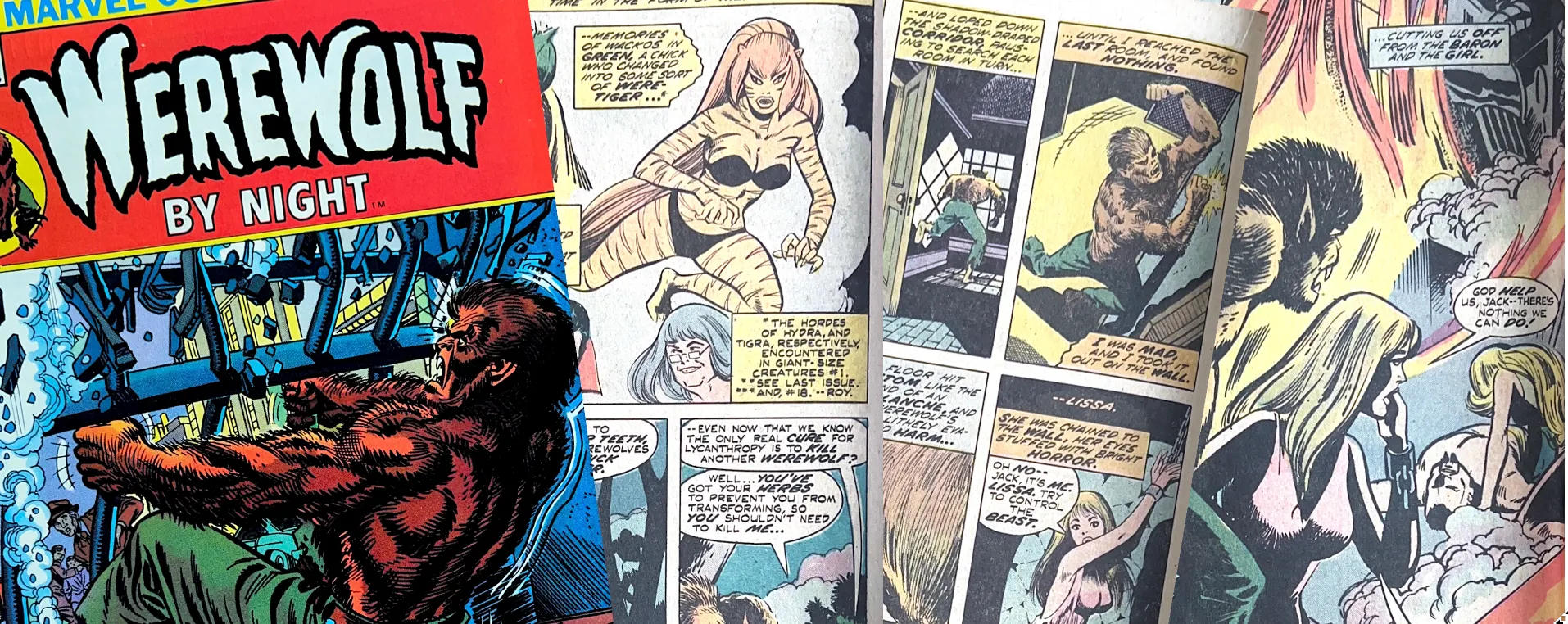
I recently bought a 1974 copy of Werewolf by Night.
Not because I’m a serious comic collector, but because it was published on my birthday, making it a nice little piece of personal history.
Flicking through the issue though, something caught my eye.
A small rectangle on the letters page.
Marvel Value Stamp #97 — Black Knight.

Still perfectly intact.
I’d never heard of Marvel Value Stamps before, but the more I read, the more I realised I wasn’t looking at a quirky marketing promotion.
I was looking at one of the earliest coalition loyalty programmes I’d ever come across.
A simple idea evolves
The idea actually began in the UK.
In 1972, Marvel UK ran a collect-and-win promotion where readers collected coupons from comics to redeem an exclusive poster. The campaign proved hugely successful.
According to Charles Kochman and Roy Thomas in Marvel Value Stamps: A Visual History, Stan Lee saw the success of the UK promotion and recognised the opportunity to take the concept much further in the United States.
The result was the Marvel Value Stamp programme, launched in 1974.
Every Marvel comic now contained a single stamp featuring one of 100 Marvel heroes or villains. Readers were encouraged to cut the stamp from the comic, paste it into an official collector’s album and, once completed, redeem it for convention discounts, merchandise and other rewards.
On the surface, it looked like another collect-and-win promotion.
But that’s not what Marvel had actually created.
Marvel wasn’t building loyalty to comics
It was building loyalty to an ecosystem.
When we think about coalition loyalty today, we think about programmes like Nectar, Flybuys or yuu Rewards in Hong Kong.
Multiple brands.
One shared currency.
One shared customer journey.
Marvel achieved something remarkably similar — but instead of supermarkets, petrol stations and department stores, its coalition partners were comic books.
If you only bought Spider-Man, you couldn’t complete the collection.
You also needed:
Fantastic Four
The Avengers
Conan the Barbarian
Werewolf by Night
dozens of other Marvel titles
Every comic became another partner in the same ecosystem.
Marvel wasn’t trying to increase loyalty to an individual title, it was encouraging readers to explore the entire Marvel Universe.
That’s a very different objective.
The mechanics were surprisingly sophisticated
Looking back more than fifty years later, the programme contains many of the behavioural principles we still use today.
Every comic purchase became a qualifying behaviour.
Every stamp represented visible progress.
The collector’s album became a tangible record of that progress.
Completion unlocked rewards.
Perhaps most interestingly, the programme encouraged customers to explore parts of the ecosystem they wouldn’t otherwise have experienced.
That’s exactly what the best coalition programmes aim to do today.
Before social media, there was the playground
My favourite part of the story is something Marvel didn’t do.
They never published a master checklist showing which comic contained which stamp.
That absence created the behaviour.
Children swapped information in playgrounds.
Comic shops became places to compare collections.
Friends traded duplicates and recommended titles they had never previously read.
As Charles Kochman recalls:
“There was no Internet back then, nor a checklist… we had to figure out which comics had which stamps and share information each week as new issues came out. It became a scavenger hunt for us, and it also accomplished what Stan and Roy intended, which was to introduce us to titles we weren’t already reading and create new fans.”
Today we’d call it social discovery. Recommendations, tips and hidden finds would spread across social media in minutes.
At the same time, the collecting behaviour itself hasn’t changed. Whether it’s Panini football stickers, McDonald’s Monopoly pieces or supermarket collectibles, people still enjoy completing sets, trading duplicates and helping others finish their collections.
The psychology hasn’t changed
Roy Thomas, Marvel’s former Editor-in-Chief, made a simple observation:
“Comics fans… tend to become completists.”
He’s right. But I’d argue this isn’t unique to comic fans.
Pretty much everyone enjoys making progress.
We like collections.
We like visible achievement.
We dislike leaving things unfinished.
The strongest loyalty programmes don’t simply reward transactions, they create a journey.
And the reward isn’t actually the discount, its the progression, challenge, and satisfaction of moving forwards and finishing something.
This behaviour is closely linked to one of the most enduring ideas in behavioural psychology, that of the Zeigarnik Effect. First described by psychologist Bluma Zeigarnik in the 1920s, it describes our tendency to remember unfinished tasks more readily than those we’ve completed.
This leads me to a broader hypothesis.
That the Zeigarnik Effect isn’t really about memory at all. It’s about context. Rather than remembering unfinished tasks, perhaps the brain keeps them within its active context because it expects them to continue.
If so, loyalty programmes built around visible progression aren’t just encouraging behaviour — they’re continually refreshing mental availability.
Looking back, every empty space in the Marvel Value Stamp album represented an unfinished story.
Every blank square kept the Marvel Universe mentally active.
Every new comic offered the opportunity to close the loop.
Fifty years later…
What surprised me most wasn’t discovering that Marvel had created a loyalty programme. It was how contemporary it felt when viewed through the lens of modern loyalty design, with the principles immediately recognisable.
Coalition participation rather than single-brand engagement
Progress made visible rather than hidden behind an account balance
The psychology of completion
Social discovery and collector behaviour
Rewards that encouraged customers to explore a wider ecosystem
It’s also fascinating to see the pace of the thinking. Within just two years, Marvel had evolved from a successful collect-and-win promotion in the UK to a far more sophisticated ecosystem-wide programme in the US.
Perhaps the real lesson from all this is that great loyalty programmes don’t simply reward customers for buying more, they encourage customers to discover more.
Marvel wasn’t rewarding readers for buying another comic, it was rewarding them for exploring another corner of the Marvel Universe.
Fifty years later, I still think that’s one of the most elegant definitions of coalition loyalty I’ve come across.
Sometimes the best lessons in loyalty don’t come from loyalty companies.
They come from comic books.