

Amazon Haul and the Untapped Potential of Plushie Derivatives
Mark Sage - 4 min read - 27/02/2026
Amazon has launched Amazon Haul, its answer to the tidal wave of ultra-low-cost imports redefining what “shopping” means.
For less than the price of a coffee, you could now own:
A phone stand that may or may not survive its first hinge movement (£0.72)
A Year of the Horse plushie who’s smile may be attached upside down (£2.90)
A screwdriver which may not be harder than the screw itself (£1.16 for a 24-in-1 set!)
It’s frictionless abundance of Christmas Cracker quality products that you just never knew you wanted.
Which made me wonder — why stop there?
If we are going to industrialise disposable novelty at scale, surely we’re missing a layer of financial innovation.
Where is the Haul Volatility Exchange?
Introducing HaulFutures
Imagine opening the Amazon Haul app but you don’t actually want the £0.99 plushie or the amazing 24-in-1 screwdriver set. You don’t need it and you know, deep down, it won’t outlast the packaging.
But you still feel the pull.
Now instead of buying it, you can take a long position on Daily Plushie Unit Sales.
Why clog your house when you can simply speculate on the velocity of landfill?
After all, the real product here isn’t the plushie.
It’s engagement.
So let’s be candid — The ultra-cheap retail model isn’t about meeting unmet needs, it’s about tempo.
When something costs £0.99, deliberation disappears, replacement beats repair, and longevity becomes irrelevant. It’s not even about the product itself, it’s about the win.
That dopamine hit of landing something that feels like a bargain, that seems to be selling fast, that’s branded in Haul-speak as 🔥 crazy low
It’s a micro-dose of novelty.
The object is secondary — participation itself is the primary goal here.
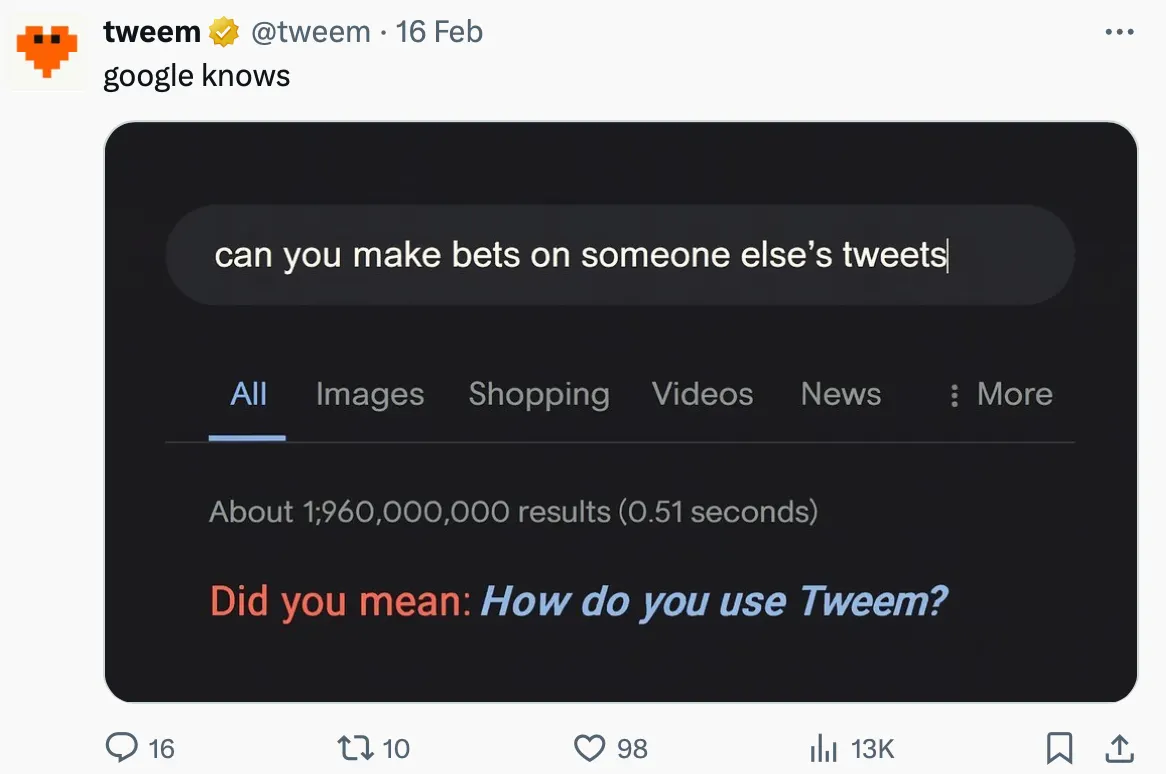
So, why not take a leaf out of Tweems book and monetise the participation directly?
In ancient Rome, they offered bread and circuses. State subsidised wheat to keep the urban population fed, with gladiator games and grand entertainments in arenas like the Colosseum to keep them entertained. It wasn’t just generosity — it was stability management.
Today we have don’t have the amazing architecture of a Roman Colosseum — it’s more big box warehouses by the M1, next-day delivery, algorithmic discovery, bright colours and flashing prices.
The architecture is less impressive.
The psychology is just as effective.
It is still cheap abundance creating a sensation of prosperity and the pinging of psychological biases.
There’s a darker elegance to the system though, with a 7-Step lifecycle that looks like:
Factory →
Feed →
Attraction 👀→
Delivery →
Brief Novelty →
Bin →
Dark Hole in the Ground Somewhere
Which is why financialising the velocity almost feels… cleaner. At least then we’re honest that the value lies in movement, not meaning.
If Impulse-commerce platforms like Temu, Shein and Haul are about democratising abundance, then the next logical step is democratising speculation.
Let consumers:
Trade daily sell-through rates
Earn points for predicting the fastest-to-landfill SKU
Unlock badges for spotting products with 0-day survival probability
Call it gamified circularity. Landfill analytics for the people.
Or call it what it is — a casino with better lighting. Farming consumer attention and engagement for a quick margin. And like every casino, the house always wins.
We could of course ask a more uncomfortable question
What would retail look like if price reflected durability?
If £0.99 novelty cost £19.99 because it wouldn’t outlast the packaging?
If the cheapest item in the basket was the one most likely to be kept for 10 years?
That’s a harder innovation problem and it’s also less entertaining than a Haul Volatility Index.
Until then, I’ll be waiting for my invitation to trade in HaulFutures™.
Because if we’re optimising for turnover, we may as well extract the maximum value from the journey to the dark hole in the ground.
Prime eligible, of course.
Loyalty Lens
Here’s the uncomfortable truth though — none of this is accidental.
The flashing prices, countdown timers, urgency nudges, the sense that something is selling fast — these aren’t gimmicks. They are motivational architecture. Carefully designed behavioural mechanics that shape attention, compress deliberation and create momentum.
The same psychological levers that power ultra-cheap impulse commerce are the very same levers that power modern loyalty programmes.
Progress loops. Variable rewards. Scarcity cues. Goal gradients. Social validation. They are tools — neutral in themselves, extraordinarily powerful in application.
Used well, they build habit in a way that creates mutual value. Keeping customers coming back because the experience genuinely improves over time. They reward longevity, deepen trust and reinforce behaviours that benefit both the brand and the customer.
Used poorly, they simply farm attention. Hooking consumers into loops that prioritise velocity over value, transaction over relationship, dopamine over durability.
The mechanic itself is not the issue — the intent is.
Impulse commerce shows how effective engagement design can be when optimised for speed. Loyalty, at its best, shows how effective it can be when optimised for stewardship.
In an age of algorithmic temptation, brands have a choice.
We can design systems that accelerate the journey to the dark hole in the ground.
Or we can design systems that make things — and relationships — last a little longer.
The tools are the same.
How we wield them is not.